In this article
"Can I double-glaze my sash windows without replacing them?" is the question we are asked most after "can they be repaired?". The answer is usually yes — but there are three quite different ways of doing it, they suit different windows and different buildings, and the trade-offs between them are rarely explained properly. This article sets them out: slim double-glazed units in the existing or new sashes, vacuum glazing, and secondary glazing on the room side. It gives the real performance figures, explains what each option does to the window itself, and says what a conservation officer is likely to accept.
One preliminary. Most of the heat a single-glazed sash window loses does not go through the glass. Historic England's figures put conduction through the glass at less than a quarter of a traditional window's heat loss; the rest is air leakage through the gaps around the sashes. So the first improvement to any sash window is an overhaul and draught-proofing, which costs a fraction of any glazing option and deals with the larger problem. Glazing comes second. If a firm proposes double glazing without mentioning draught-proofing, it is selling glass, not solving the window.
The figures, plainly
Glass performance is measured as a U-value in W/m²K — the lower, the better. The figures below are centre-pane values, which is how glass is compared; the whole-window figure is always a little worse because of the frame.
- Single glazing, 4 mm float: about 5.7.
- Standard double glazing, 4-16-4 with argon and a low-e coating: about 1.2. Too thick — 24 mm — for any original sash.
- Slim double glazing, 10 to 14 mm overall with a low-e coating and argon or krypton fill: typically between about 1.5 and 2.0 depending on the gap and the gas.
- Vacuum glazing, 6 to 9 mm overall: from around 1.1 down to about 0.5, depending on the product.
- Single glazing plus low-e secondary glazing: comparable to slim double glazing for heat, and better than any of them for noise.
For scale, the Energy Saving Trust estimate that fitting A-rated double glazing throughout a typical single-glazed semi-detached house costs in the region of £4,800 and saves about £85 a year on heating. That is for the whole house, and it is the number to hold in mind when a salesman talks about payback.
Option one: slim double-glazed units
A slim unit is an ordinary sealed double-glazed unit made thin enough to fit the glazing rebate of a timber sash: two panes of 3 or 4 mm glass, a spacer of 4 to 6 mm, a low-e coating on the inner face and a gas fill. The narrow gap is why the U-value is higher than a standard unit; krypton, which insulates better than argon in a narrow space, closes some of the difference at a higher price.
Into the existing sashes
Whether the original sashes can take a slim unit depends on the depth of the glazing rebate — the step in the timber that the glass sits in. A Victorian sash with a rebate of 12 mm or so can be routed a little deeper to take a 10 or 12 mm unit, glazed with a flexible sealant behind and putty or a timber bead in front. A Georgian sash with fine glazing bars usually cannot: the bars are too thin to rout without weakening them, and the unit's edge seal would show as a grey line inside the putty. Where the sashes are sound and the rebates deep enough, glazing the existing sashes keeps everything original except the glass.
Into new sashes
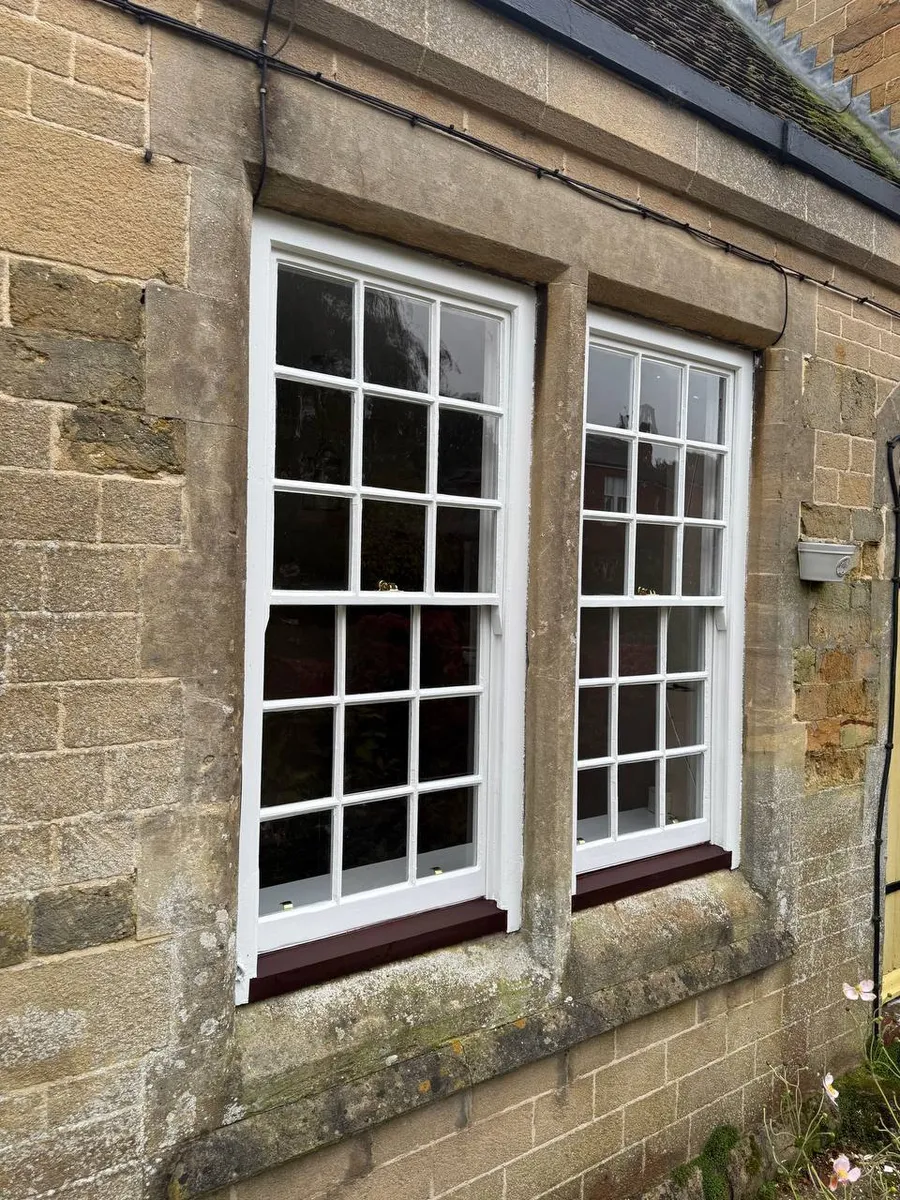
More often the answer is new sashes, made to the original pattern with rebates sized for the unit and glazing bars proportioned to carry it, fitted into the existing box. This is still a repair to the window rather than a replacement of it: the box, the sill, the architraves and the shutters stay, the street elevation keeps its proportions, and the new sashes are indistinguishable from the old at a few paces. It is the route we recommend for most Victorian houses that want double glazing.
What it does to the window
Weight, first. A slim unit weighs roughly twice as much as the single pane it replaces, so the counterweights have to be increased — with lead weights in place of iron where the pockets are tight, or with additional weights, or occasionally with spring balances where there is no room. This is routine but it has to be done, or the sashes will not stay up.
Appearance, second. A sealed unit has a spacer bar and an edge seal around its perimeter. In a slim unit these are narrow and can be specified in a dark colour or with a slim warm-edge spacer, and set behind putty or a bead they are all but invisible, but in bright light at close quarters a sharp eye will find them. The glass itself is modern float, flat and reflective; the ripple of old cylinder glass is gone.
Longevity, third, and this is the honest caveat. The edge seal of a sealed unit is what keeps the gas in and the moisture out, and a slim unit has a narrower seal than a standard one. Early slim units, fifteen years ago, had a poor record for misting. Modern units from reputable makers are much better, but their guarantees are typically shorter than for standard units, and a misted unit is a replaced unit — there is no repair. Putty-glazed units also need the putty to be kept painted, because linseed putty in contact with a sealed unit's edge can degrade the seal.
Consents
In a conservation area, glazing the existing sashes or fitting new sashes of the same pattern in the original box needs nothing on a house without an Article 4 Direction. On a listed building it needs listed building consent, and the outcome varies: some councils accept slim units in new sashes on Grade II houses where the original glass has already gone, others refuse them on principal elevations. Under the Building Regulations, replacing the glass within an existing frame is not a controlled fitting, so Part L is not triggered and no FENSA certificate is involved; new sashes in an existing box are generally treated the same way, though it is worth confirming with building control on a large job.
Option two: vacuum glazing
A vacuum unit is two panes of glass a fraction of a millimetre apart, with the space between them evacuated rather than gas-filled and the panes held apart by a grid of tiny pillars. With no gas to conduct heat, the unit performs like a good triple-glazed unit at a thickness of 6 to 9 mm — thin enough to go into almost any sash, including Georgian bars, with no routing.
The advantages are obvious: the best U-value of any option, the thinnest profile, and a weight close to single glazing on the thinnest products so the counterweights may not need changing. The drawbacks are the pillars — a faint dot grid, on a 20 to 30 mm pitch, that is visible when you look for it and invisible when you do not — a small evacuation cap on some products, and price: vacuum glazing costs several times what a slim unit does per square metre, and it is a specialist product with a small number of makers. On the plus side, the pane is fully tempered and the edge seal is glass-to-glass, so the misting problem of thin sealed units does not arise.
Conservation officers have been noticeably warmer to vacuum glazing than to slim sealed units, precisely because it fits an unaltered sash. It still needs listed building consent on a listed house; it is often granted.
Option three: secondary glazing
Secondary glazing is a separate glazed panel fitted on the room side of the window — sliding, hinged or lift-out, in a slim aluminium or timber frame — leaving the original window completely untouched. It is the option most often overlooked, and for two kinds of building it is the best answer.
The first is the listed building where the officer will not allow the glass to be changed. Secondary glazing is reversible, does not alter the historic fabric and generally needs no consent at all; even on a Grade I house it is routinely accepted.
The second is the house on a busy road. Noise reduction depends on the air gap between the two panes, and secondary glazing gives a gap of 100 mm or more, against 4 to 16 mm in a sealed unit. For traffic noise it outperforms any double glazing that fits in a sash, and with an acoustic laminated pane in the secondary frame the difference is dramatic.
For heat, single glazing with a low-e secondary pane performs in the same territory as slim double glazing, and the Building Regulations recognise the combination explicitly as an acceptable route for buildings where character matters. The costs are usually lower than new double-glazed sashes.
The drawbacks: a second frame inside the reveal, which some people dislike and which needs to be designed around shutters and blinds; a second surface to clean; and one rule that trips people up — if secondary glazing is fitted, the original window should not also be draught-proofed, because sealing both traps moist air in the cavity and produces condensation on the inside of the outer glass. The outer window is left to breathe; the secondary unit does the sealing.
Which to choose
The decision usually falls out of the building rather than the brochure.
- Victorian or Edwardian house, not listed, sound box, tired sashes: new sashes to the original pattern with slim units, plus draught-proofing. This is the majority case.
- Victorian house, sound sashes with deep rebates, original glass already gone: slim units into the existing sashes.
- Georgian sashes with fine bars, or a listed building where consent for sealed units is unlikely: vacuum glazing if the budget allows, secondary glazing if not.
- Any house on a main road, or where noise is the real complaint: secondary glazing, with an acoustic pane.
- Original crown or cylinder glass still in place: think hard before replacing it with anything. Secondary glazing keeps it; every other option throws it away.
And in every case, the overhaul and draught-proofing come first. On many houses they turn out to be enough.
Frequently asked questions
Can original sash windows be double glazed?
Yes, in most cases. Slim double-glazed units 10 to 14 mm thick can be fitted into existing sashes with deep enough rebates or, more often, into new sashes made to the original pattern for the existing box. Vacuum glazing at 6 to 9 mm fits almost any sash, and secondary glazing improves the window without touching it.
What is the U-value of slim double glazing?
Typically between about 1.5 and 2.0 W/m²K centre-pane, depending on the gap width and whether it is filled with argon or krypton, against about 5.7 for single glazing and about 1.2 for a standard 24 mm unit. Vacuum glazing reaches around 1.1 down to about 0.5.
Will double glazing make my sashes too heavy?
A slim unit roughly doubles the weight of the glass, so the counterweights are increased — lead weights, extra weights or spring balances — as part of the job. Vacuum glazing on the thinnest products weighs little more than single glazing. Either way the sashes are rebalanced so they run and stay put.
Do I need planning permission to double glaze sash windows in a conservation area?
Not on a house without an Article 4 Direction, provided the window keeps the same appearance — glazing the existing sashes or fitting new sashes of the same pattern in the original box qualifies. On a listed building, changing the glass needs listed building consent; secondary glazing usually does not.
Is secondary glazing as good as double glazing?
For heat, single glazing with a low-e secondary pane is comparable to slim double glazing. For noise it is better, because of the much wider air gap. It is also fully reversible, which is why conservation officers prefer it on listed buildings. Its drawback is the second frame inside the room.
How long do slim double-glazed units last?
Modern slim units from reputable makers carry guarantees that are typically shorter than those on standard 24 mm units, because the narrower edge seal is the weak point. A unit that mists has failed and is replaced, not repaired. Vacuum units have a glass-to-glass seal and do not mist in the same way.
Does replacing the glass in a sash window need building regulations approval?
No. Replacing glazing within an existing frame is not a controlled fitting under Part L, so there is no energy standard to meet and no FENSA certificate. Replacing the whole window is different, and does have to meet Part L unless the building's character justifies a relaxation.